


Table of Contents
- Are Fuse Beads Color Accurate?
- What Affects Fuse Bead Color Accuracy
- Using an Artkal Bead Color Chart for Accurate Selection
- Converting Pixel Art to Fuse Bead Patterns
Last Updated: August 10, 2026
Are Fuse Beads Color Accurate?
Fuse bead projects live or die on color accuracy. You spend hours designing pixel art and arranging beads on a pegboard, only to find the colors don't match your vision. At Fuse Bead Shop, we work directly with Artkal beads and hear this concern constantly. The short answer: yes, quality fuse beads like Artkal are color accurate, but only when you understand what "accurate" means and how to work with the variables that affect final color.
Color accuracy depends on your bead source, heat application, lighting during selection, and how you convert digital designs into physical bead arrangements. Once you understand these factors, achieving consistent, reliable color becomes straightforward.
What Affects Fuse Bead Color Accuracy
RGB values versus physical beads. Digital pixel art uses RGB color values; physical fuse beads use pigment. A screen displays color through light emission; a bead displays it through reflection and absorption. A bead labeled "electric blue" will never look identical to the electric blue on your monitor because pigment saturation and light interaction differ fundamentally from backlit pixels.

Batch consistency and manufacturing tolerances. Even beads from the same manufacturer show slight shade variations between production batches. Quality manufacturers like Artkal minimize this through rigorous quality control, but zero variation is impossible.
Heat application during ironing. Under-ironing leaves beads less fused, affecting light reflection and color saturation. Over-ironing can degrade pigment, causing colors to shift or darken. Iron temperature, contact duration, and pressure all influence the outcome.
Lighting conditions during selection and viewing. The light you use when selecting beads dramatically affects color perception. Fluorescent workshop lighting renders colors differently than natural daylight.
Post-ironing color shift. Fuse beads sometimes show subtle color shifts after cooling. Some darken slightly as plastic sets; others appear more saturated once fully cooled.
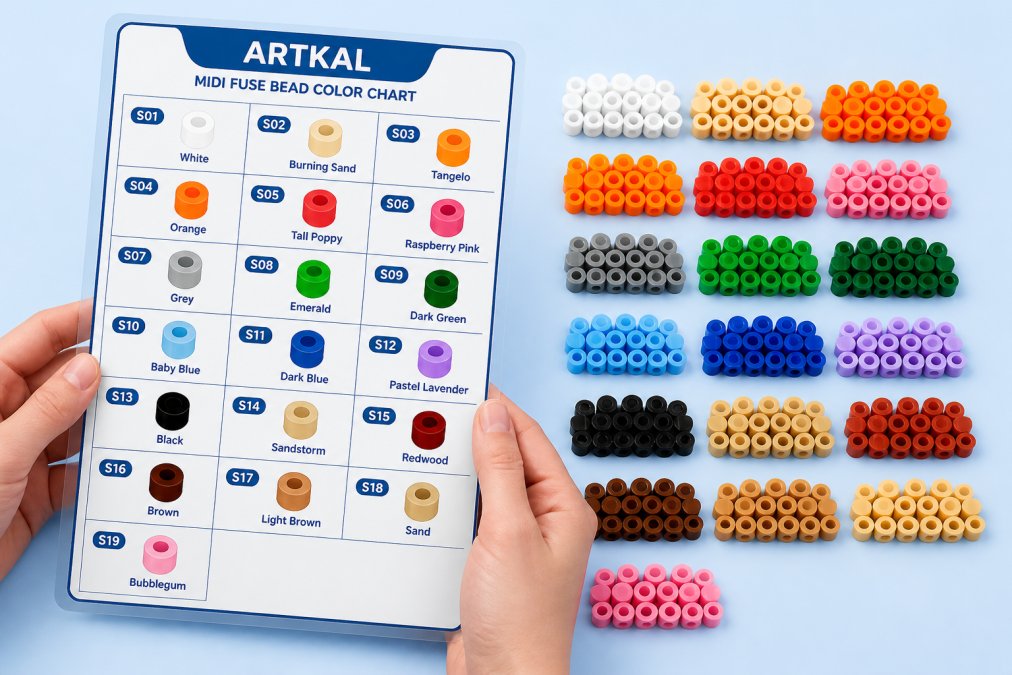
Using an Artkal Bead Color Chart for Accurate Selection
An Artkal bead color chart is your reference anchor, showing exactly what each bead color looks like in standardized lighting. Order a sample set and compare physical beads directly against your pixel art reference under your normal crafting light.
Artkal offers beads in both S-Midi (5mm) and C-Mini (3mm) sizes. Smaller beads can appear slightly more saturated than larger beads of the same shade due to surface area and light reflection properties.
Converting Pixel Art to Fuse Bead Patterns
Digital-to-physical conversion is where most color accuracy issues surface. Your pixel art exists in RGB color space; your bead selection exists in a limited physical palette.
Start by identifying the exact RGB or HEX values in your pixel art using a color picker tool. Next, map each RGB value to the closest available bead color in Artkal's palette using the color chart. Fuse bead projects inherently involve color compromise, your palette is limited compared to digital RGB's 16.7 million possible colors.
Test your color choices before committing to a full project. Iron a small sample section, let it cool completely, and compare the result to your original pixel art under your normal crafting light. This reveals whether your selections translate well and how beads behave under your heat application technique.
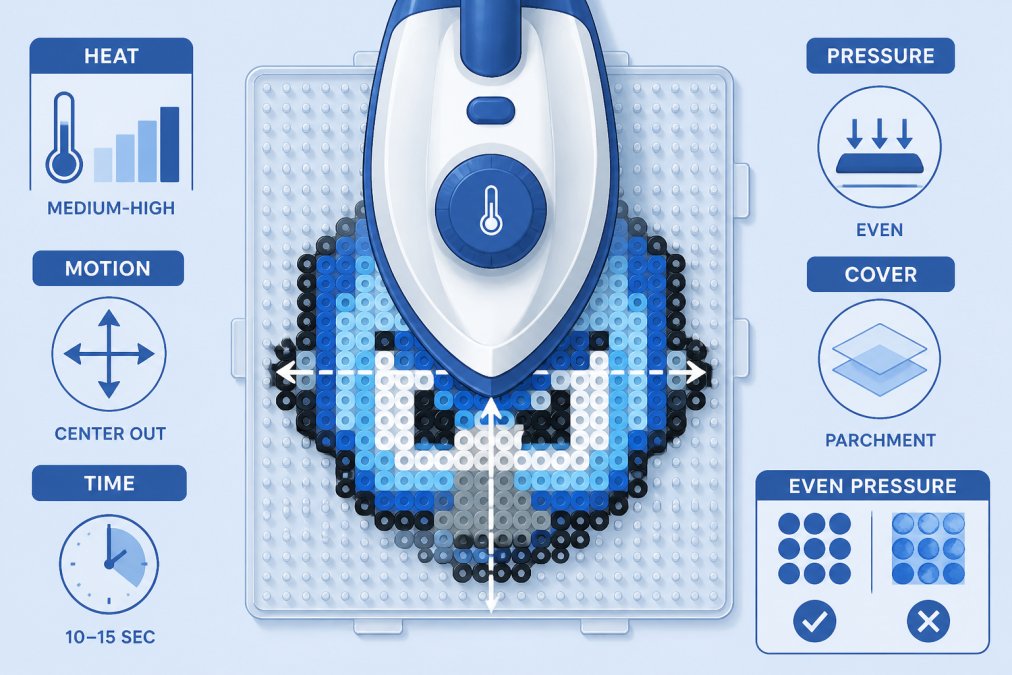
Fuse Bead Melting Techniques for Consistent Color
Temperature control. Most fuse bead irons operate at fixed temperature. A stable iron maintains even heat throughout the ironing surface.
Pressure and contact duration. Light, even pressure applied for 10-15 seconds typically fuses beads adequately without degrading pigment. Pressing hard or holding the iron for 30+ seconds can over-fuse beads, causing color shift or darkening.

Even coverage. Move the iron slowly across your design to ensure every bead receives similar heat exposure. Rushing creates hot and cold spots.
Cooling process. Let your project cool on the pegboard before removing it. This allows plastic to set properly and color to stabilize.
Batch Consistency and Quality Control
Quality fuse bead manufacturers implement testing protocols to maintain consistency across production runs. Artkal conducts quality checks to ensure shade variation is minimized and predictable. When you purchase Artkal beads from Fuse Bead Shop, you're getting beads that have passed these consistency checks.
If you notice significant color variation within a batch, contact your supplier.
Compatibility Between Different Bead Brands
Many creators mix beads from different manufacturers, but this complicates color accuracy. Different brands use different pigment formulations and manufacturing processes. A "red" from one brand might have different saturation or undertone than a "red" from another.
If you're committed to consistent, predictable color, stick with a single brand for each project. Artkal's full range is comprehensive enough for most designs.
Quality beads from established manufacturers like Artkal are genuinely color accurate within the constraints of plastic manufacturing and pigment chemistry. Your finished projects will match your design intent as long as you understand the variables and account for them. Test your beads, control your heat application, and use consistent lighting when selecting colors.
Ready to start a project with beads you can trust? Fuse Bead Shop carries Artkal's complete color range, including Electric Blue (S101) Midi Fuse Beads (1000pcs) and Tangelo (S03) Midi Fuse Beads (1000pcs). We ship fast across the US and stand behind every order. Add your beads to cart and bring your pixel art to life with confidence.
Frequently Asked Questions
Why do fuse bead colors look different after melting?
Color shift happens because heat changes how light passes through the polyethylene material. Beads often appear darker or more saturated once melted due to increased pigment density and material transparency changes. Using consistent heat settings and test-ironing samples helps predict final color before committing to your full design.
How can I find accurate color charts for Artkal beads?
Artkal provides detailed bead color charts with both physical bead samples and digital color references. Compare the chart against your design under the same lighting conditions you'll use for your finished project. Batch consistency varies slightly, so ordering a small test batch before a large project ensures the colors match your expectations.
Do different brands of fuse beads have the same color names?
No. Color naming conventions differ between manufacturers. Two brands may both label a shade 'red,' but the actual hue, saturation, and depth can vary significantly. When mixing brands or switching suppliers, test samples side-by-side under your working light to verify compatibility and visual harmony in your finished piece.
How do I match digital pixel art colors to physical fuse beads?
Start by converting your design's RGB or HEX values to the closest Artkal bead color using the manufacturer's color chart. Print your design and place physical bead samples next to it under your crafting light. Lighting conditions dramatically affect color perception, so what looks right under fluorescent light may differ under natural daylight or LED bulbs.


