


Table of Contents
- Why Fuse Beads Spill and How to Prevent It
- Best Storage Containers for Fuse Beads
- Workspace Setup and Spill Prevention Techniques
- Bead Spill Cleanup Hacks and Recovery
Fuse beads are tiny, colorful plastic cylinders that lock together to form intricate designs. But they're infamous for one thing: spilling everywhere. One moment you're carefully placing beads on a pegboard, the next you're chasing dozens across your workspace. The good news? Preventing fuse beads from spilling isn't complicated, it just requires the right setup and smart habits.
This guide covers everything you need to keep your beads contained, organized, and ready to fuse.
Why Fuse Beads Spill and How to Prevent It
Fuse beads spill because they're small, lightweight, and unstable when stacked. A slight bump, vibration, or static electricity can send them rolling. Most spills happen during three moments: transferring beads between containers, working on a pegboard, or storing beads loosely.
The real issue isn't the beads themselves, it's the environment. A smooth, flat surface with no containment creates the perfect conditions for disaster. Add static electricity (especially in dry conditions), and beads literally jump off surfaces.
Preventing fuse beads from spilling starts before you even open a container. It's about designing your workspace so a spill becomes nearly impossible: choosing the right storage, setting up your work area with physical barriers, and using tools designed to keep beads where they belong.
Best Storage Containers for Fuse Beads
The container you choose directly impacts how easily beads escape.
Compartmentalized storage boxes are the gold standard for preventing fuse beads from spilling during storage. Look for containers with individual, sealed compartments for each bead color. Plastic boxes with snap-shut lids work better than cardboard. The compartments should be deep enough that beads can't overflow when you open the lid quickly.
Bead trays with raised edges are essential for active work. These shallow, rectangular trays have walls high enough to contain beads if you bump them. A felt mat or non-slip surface inside prevents beads from rolling around.
Plastic containers with secure lids beat loose bags every time. Ziploc-style containers keep moisture out and beads in. For larger quantities, clear plastic bins with latching lids let you see what you have without opening them constantly. Label each container with the bead color and size.
Avoid these storage mistakes:
- Paper bags or cloth pouches (beads escape through seams)
- Open jars without lids (invites spills and dust)
- Mixing different bead sizes in one container (smaller beads shift and settle)
- Storing beads in direct sunlight (colors fade, plastic degrades)
Workspace Setup and Spill Prevention Techniques
Your workspace design determines whether preventing fuse beads from spilling is easy or exhausting.
Step 1: Create a contained work zone. Use a bead tray or shallow box as your primary workspace. The raised edges act as a physical barrier, stopping 80% of spills before they happen.
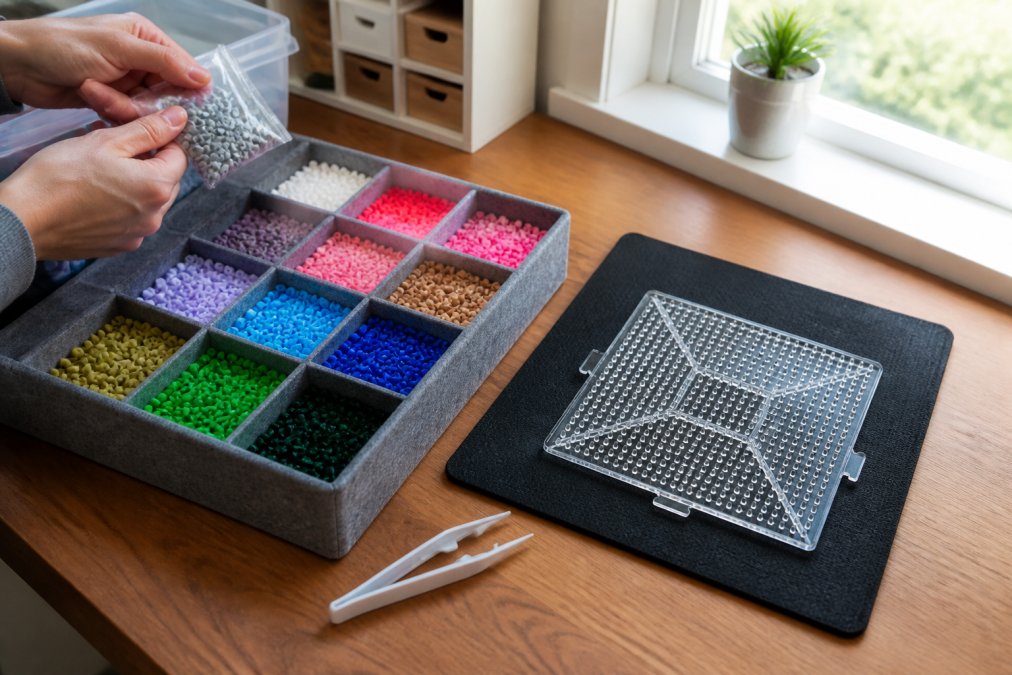
Step 2: Use a non-slip surface. Place your bead tray on a felt mat or rubber-backed surface. This reduces vibration and prevents the tray itself from sliding.
Step 3: Invest in proper tools. Straight plastic bead tweezers give you precision control and reduce the need to grab beads with your fingers, which often causes spills.

Step 4: Keep your pegboard elevated and stable. Prop it at a slight angle using a small stand or books underneath. This keeps beads from rolling off the sides.
Step 5: Work in sections. Don't fill your entire pegboard at once. Complete one design area, then move to the next. This limits the number of beads exposed at any given time.
Step 6: Control your environment. Work in a space with low traffic. Tell family members or roommates to avoid your workspace while you're actively placing beads.
Bead Spill Cleanup Hacks and Recovery
Even with perfect prevention, spills happen. The key is recovering quickly without losing beads.
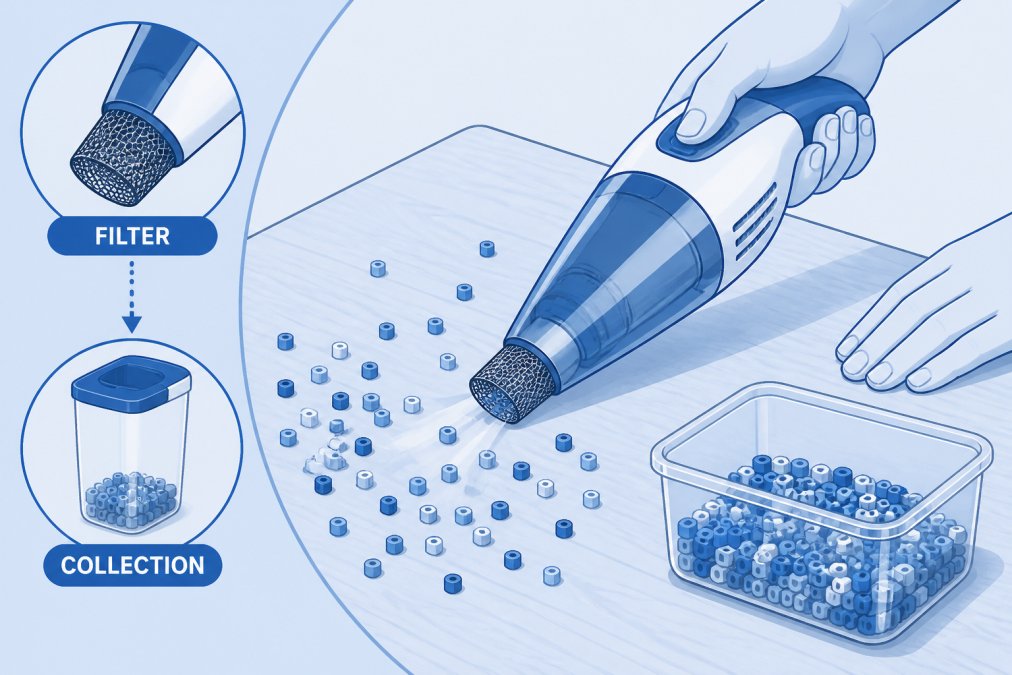
The vacuum method: A handheld vacuum with a fine mesh filter works for large spills. Tape the mesh over the vacuum's intake tube. Beads land in the mesh, not inside the machine.
The cloth method: Lay a damp cloth or towel over the spill area. The moisture stops beads from rolling and makes them easier to gather. Fold the cloth and pour beads into a container.
The flashlight technique: In low light, beads hide under furniture and in corners. Use a flashlight to spot them before sweeping. Beads reflect light, making them visible even in shadows.
Sorting recovered beads: After cleanup, sort beads by color and size before returning them to storage. Mixing sizes during recovery creates problems later when you need specific bead counts.
Preventing fuse beads from spilling comes down to three things: the right containers, a thoughtful workspace, and quick cleanup habits. A bead tray, a felt mat, and quality tweezers handle most situations. When you're ready to stock up on supplies, Fuse Bead Shop offers everything you need, from Artkal fuse beads in every color. Get started today and spend more time creating and less time chasing beads across your floor.
Frequently Asked Questions
What is the best way to store fuse beads to prevent spills?
Use compartmentalized storage containers with secure lids and non-slip bases. Plastic storage boxes with dividers work well for organizing seed beads and larger Artkal fuse beads separately. Keep containers on a felt mat or non-slip surface to prevent sliding. For active crafting, transfer only the bead colors you need into small, lidded containers rather than working from bulk storage. Label each compartment clearly to avoid mixing colors and reduce the need to open multiple containers.
How do you keep beads from rolling off the pegboard during crafting?
Bead stoppers and strand security clips are essential. Place stoppers at both ends of your pegboard design to contain beads as you work. Use a bead tray or mat with raised edges beneath your pegboard to catch any beads that escape. Work on a felt mat rather than a bare table, static electricity and friction help keep beads in place. For seed beads, which are smaller and roll more easily, use a bead mat with a textured surface to increase grip.
What tools help pick up spilled fuse beads quickly?
Straight plastic bead tweezers like the ones from Fuse Bead Shop ($1.00, 5 inches long) are ideal for precise pickup of individual beads. For larger spills, use a small handheld vacuum with a fine mesh filter, or place pantyhose over the vacuum nozzle to catch beads without losing them. A bead scoop or small dustpan works for gathering multiple beads at once. Keep these tools within arm's reach of your workspace to respond to spills immediately before beads scatter further.
Are there specific containers that prevent bead spills?
Yes. Look for plastic storage containers with secure snap-lock lids and compartmentalized dividers. Containers with non-slip bases prevent sliding on work tables. Bead trays with raised edges and felt-lined bottoms contain beads during sorting and transferring. For daily crafting, small lidded jars or pill organizers work well for individual colors. Avoid containers with loose lids or shallow sides. Artkal fuse beads work best in containers designed specifically for craft supplies, as these typically have better lid security and compartment depth than generic storage boxes.
This article was written using GrandRanker


